:
MRV Is a Service, Not Software: How Terraton Closed Its First Carbon Credit Deal in 60 Days by Outsourcing to Offstream
A biochar startup scaling toward thousands of facilities needed more than a dMRV software platform. They needed a carbon team - built directly into the business, fluent in registry language, and trusted enough to make buyer due diligence go smoothly. The result: their first carbon credit purchase agreement signed within 60 days, 2–3 FTEs of in-house carbon hiring avoided, and a roadmap accelerated by 3 to 6 months.
.png)
How Terraton Built Offstream Into Their Business
- Life Cycle Assessment (LCA): Project-specific carbon accounting across geographies and feedstocks, delivering earlier credit yield estimates, optimized facility design, and a defensible baseline.
- Project Design Documents (PDDs): From early-stage financing PDDs to FID-ready and registry-certified versions: written for the right audience at every stage.
- Monitoring, Reporting, and Verification (MRV): Not just software, but the consultative work of structuring data so it stands up to registries, auditors, and buyers.
- What stays in-house at Terraton: Building biochar facilities, sourcing feedstocks, and operating across geographies. The carbon credit translation layer is outsourced by design.
Building Biochar Carbon Removal at Scale
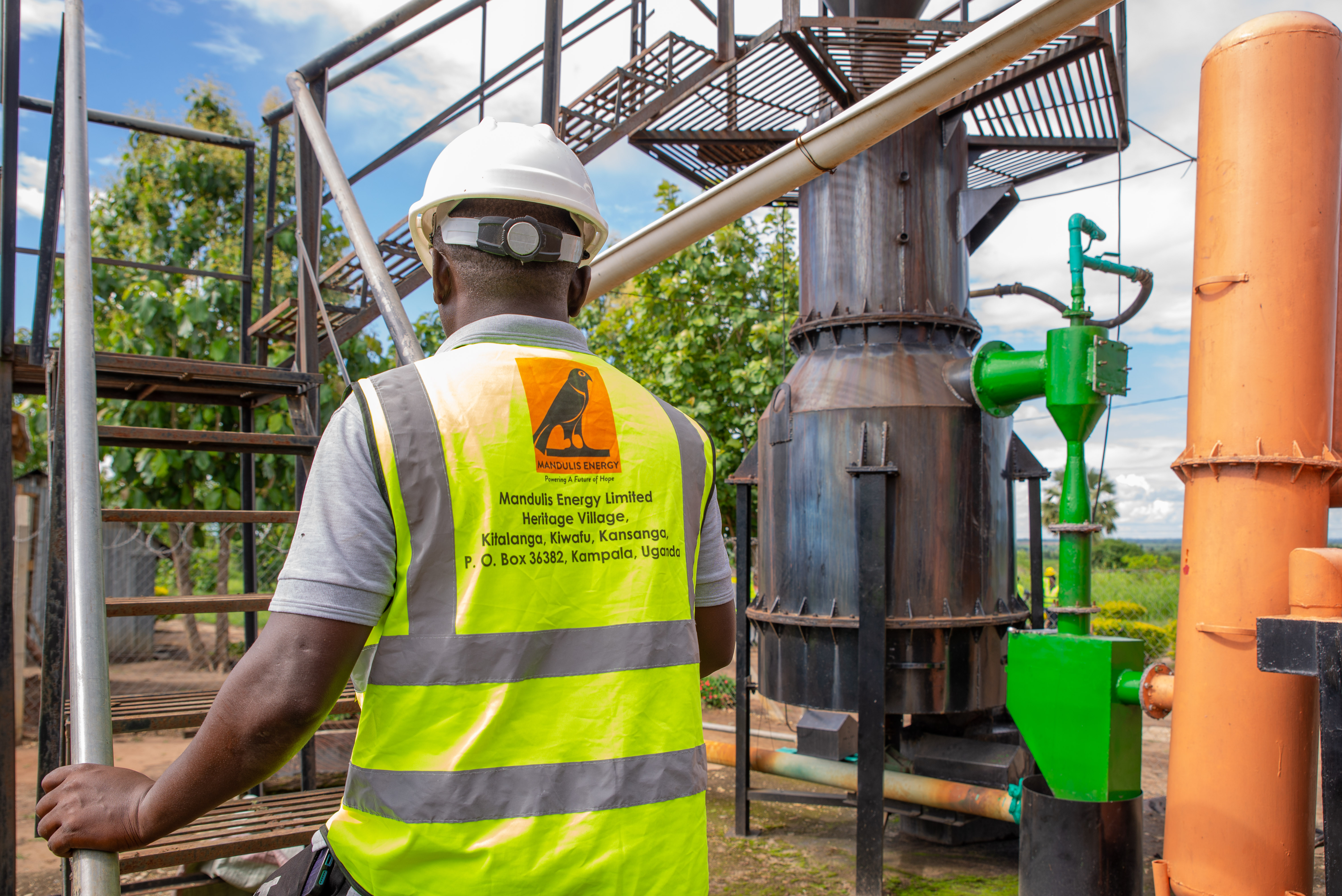
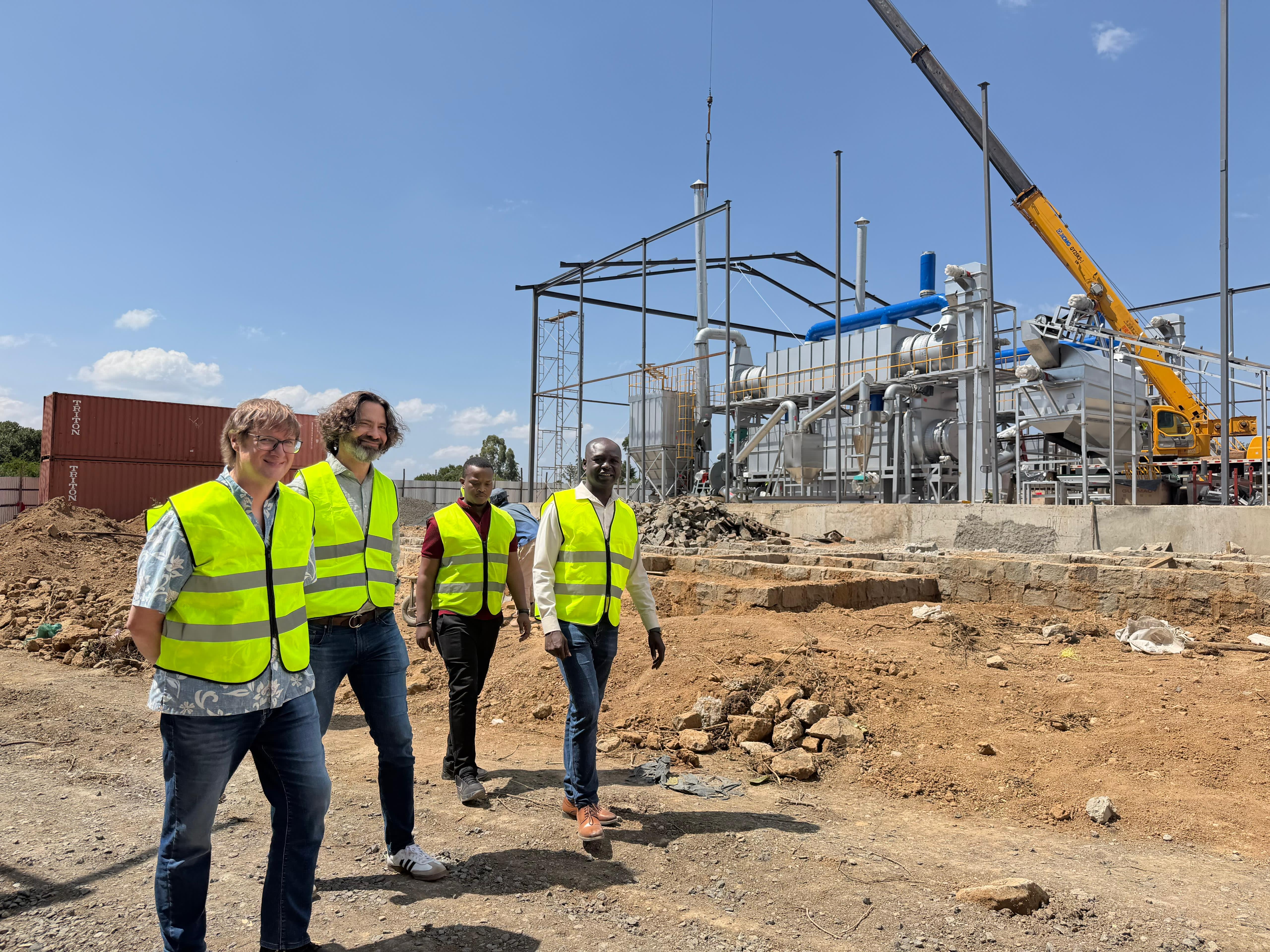
Terraton is a biochar carbon removal startup building a portfolio of thousands of facilities across multiple geographies and feedstocks, from nut shell in Kenya to cocoa pod husk and other agricultural residues. The company is engineering-driven, software-fluent, and run by founders who came from enterprise software.
That background mattered when Terraton started evaluating MRV. As Co-Founder Greg D'Alesandre puts it, software can be built. The hard part is figuring out what to put into the software - and which language to use when registries, auditors, and credit buyers ask their questions.
Terraton built its carbon program around that insight: outsource the translation layer to a team that speaks the language fluently. Keep building biochar.
Registry Requirements Are Detailed. What to Actually Do With Them Isn’t
When Terraton began preparing for carbon credit certification, they ran into the same problem that stops most new biochar project developers: registry methodologies are thorough, but they’re written in the language of the registry, not the language of a facility operator on the ground.
“The registries have a lot of detailed requirements,” said Greg D’Alesandre, Terraton’s co-founder. “But those requirements don’t necessarily translate into: here’s what you actually have to do. What does this mean for a biochar facility in Kenya?”
Terraton initially explored building their own MRV process internally. They also tried listing themselves as their own MRV provider in early buyer RFPs. Both approaches created the same problem: a flood of follow-up questions from buyers and registries who needed to scrutinize every detail of a self-built system. For a team that was still learning the space, that scrutiny was both time-consuming and reputationally risky.
They went through the Puro pre-approval process early on, answering questions as best they could - but without knowing how to frame responses in the way registries needed to see them. The result was avoidable friction that cost them time and created unnecessary back-and-forth.
The core insight Greg’s team arrived at: “MRV is not software. MRV is a service. Software is just the mechanism through which the service is used. The hard part is figuring out what you put into the fields - and that’s a knowledge problem, not a technology problem.”
Going to a registry without the right partner is like going to court without a lawyer. You can answer the questions, but you might not know what you’re saying because you don’t know how to speak the language of the court.
— Greg D’Alesandre, Co-founder, Terraton
Beyond MRV: Why Terraton Chose a Full-Stack Carbon Certification Partner
Terraton evaluated several options in the market, including MRV platforms focused on sensor integration and IoT data automation. Those platforms were built to digitize the operational data layer - useful, but incomplete. For Terraton, a software company that already understood technology, the software layer wasn't the gap. The gap was expertise.
What Terraton needed was someone who had already walked the path: who knew how the carbon credit registries interpreted their own requirements, who could translate methodology language into facility-level action items, and who had relationships across the industry that a new entrant simply couldn’t replicate.
Offstream stood out for three reasons:
- Experience that transferred directly: Offstream had supported enough biochar certification processes to know where teams get tripped up - and how to avoid it.
- Industry connections: Offstream’s network gave Terraton access to conversations and introductions that would have taken months to develop independently.
- Trust built before the contract: Offstream’s team was making introductions and adding value before Terraton signed anything - a signal of how they operate as a partner, not just a vendor.
In the end, none of the other options were the Offstream team. You have to choose somebody to work with. When everyone is offering some iteration of the same thing, you bet on the people.
— Greg D’Alesandre, Co-founder, Terraton
LCA PDD, and dMRV - In One Place, From Day One
Terraton describes Offstream not as an “MRV provider” but as an “LCA, PDD, and MRV provider” - because those are three meaningfully different functions, and conflating them is one of the most common and costly mistakes new developers make.
Dynamic LCA from the start
Before a facility is built, developers need to understand their project’s emissions profile and projected credit yield. Offstream’s LCA modeling gave Terraton a defensible starting point: one they could put in front of investors, registries, and buyers without having to rebuild from scratch at each stage.
PDD support for every audience
Greg’s team learned quickly that there isn’t just one PDD. There’s a finance-stage PDD for early investor conversations, a development PDD for registry pre-approval, and a certified PDD for formal issuance. Offstream helped Terraton develop the right document for each audience, at the right level of detail, at the right time. They also collaborated on a novel “Super PDD” structure tailored to Terraton’s multi-site portfolio approach - something that required creative problem-solving, not software.
dMRV that’s consistent with everything upstream
Because Offstream owns the LCA, the PDD, and the dMRV together, Terraton’s data is consistent across every layer - no reconciliation headaches, no contradictions between what the LCA says and what the MRV reports. That consistency is what buyers and registries are actually checking for.
Every time we've come with something new to explore or reimagine, Offstream has said 'let's figure that out.' That collaborative, flexible approach has been one of the great things about working with them.
— Greg D’Alesandre, Co-founder, Terraton
Four KPIs That Moved
Money Saved: ~$150,000-$300,000 per year in avoided headcount
The depth of expertise Offstream provides across registries, feedstocks, geographies, and evolving market standards, is not something you can hire for easily or cheaply. Terraton estimates that replicating this capacity in-house would have required two to three additional full-time hires at compensation that varies significantly by geography and seniority, but easily reaches $150,000–$300,000 per year for the level of registry fluency required.
Time Saved: 3-6 months faster to verified credits
Going it alone would have meant sifting through methodology documents, misframing registry submissions, and rebuilding processes every time Terraton entered a new geography or feedstock. Terraton estimates this would have delayed their path to verified credits by three to six months - direct revenue deferred in a business where the product is the credit. Offstream compressed that timeline by providing answers that would otherwise have taken months to arrive at independently.
It’s less about spending less time and more about accelerating the result. If we weren’t working with Offstream, we would have been making our way in the dark.— Greg D’Alesandre, Co-founder, Terraton
Peace of Mind: Expanding into new areas with confidence
Every time Terraton has explored a new feedstock, geography, or registry, they’ve been able to ask Offstream for a trustworthy read on the eligibility and optics of that option. When they were evaluating certain new feedstocks, Offstream’s guidance helped them quickly determine it wasn’t where they should be spending their time. That kind of fast, reliable input from people who have already done the research is what allows Terraton to move with confidence instead of caution.
As Terraton scales toward projects on multiple registries, the precedent compounds. Every new project benefits from work already done in partnership with Offstream, rather than starting from scratch in each new context.
Market Credibility: Zero follow-up questions from buyers
When Terraton listed themselves as their own MRV provider in early RFPs, buyers and registries asked question after question. The due diligence burden was enormous and, for a team that was still building their knowledge base, created real reputational risk in a small, relationship-driven industry.
The moment they named Offstream as their MRV partner, the questions stopped.
When you say you’re working with Offstream, there are no more questions. When you say you’re building your own MRV, there are a zillion questions. Buyers and registries should be skeptical of developers who don’t use a third-party MRV provider - and they are.
— Greg D’Alesandre, Co-founder, Terraton
In a market where reputation rises and falls fast, that credibility signal is not a soft benefit. It's the thing that keeps deals moving.
What you’re doing with Offstream is buying reputation. And in this industry, reputation is everything. Who doesn’t want to pay for that?
— Greg D’Alesandre, Co-founder, Terraton
Carbon Credit Certification Is a Knowledge Problem, Not a Software Problem
The carbon removal market is still young, complex, and relationship-driven. Registry requirements are real but difficult to interpret. Standards evolve. Buyers and investors are sophisticated and skeptical. In that environment, the developers who move fastest and build the most durable businesses are the ones who surround themselves with the right expertise early, rather than trying to figure it all out alone.
Terraton’s experience with Offstream shows what that looks like in practice: fewer hires, faster timelines, confident expansion into new markets, and a credibility signal that opens doors instead of creating friction.
The guesswork doesn’t have to be part of the process.
BUILD OFFSTREAM INTO YOUR BUSINESS
If you're a project developer weighing whether to build your own MRV, hire a generalist consultant, or buy a software-only platform - there's a better path. Let Offstream be the embedded carbon expertise from day one, trusted by developers across biochar and other CDR pathways.
You stay focused on building your project. Offstream handles the LCA modeling, the PDD writing, the MRV implementation, and the registry-fluent reputation that buyers, auditors, and investors look for on every RFP.
Is MRV software or a service?
MRV is a service that uses software as the delivery mechanism. The software side - capturing data, generating reports, managing workflows, is the easy part. The hard part is translating registry requirements into project-specific data structures, anticipating what auditors and buyers will ask, and producing documentation that holds up under scrutiny. As Terraton describes it, the software is just the mechanism. The value is having a team that knows what the data needs to say, and how to defend every number to registries, auditors, and buyers.
Should I build my own MRV in-house?
Most developers who attempt it discover what Terraton learned: building the software is straightforward, but defending a self-built MRV program in front of buyers, registries, and auditors is not. Buyers ask significantly more due diligence questions when a developer says they built their own MRV - slowing deals and increasing the risk of missteps that disqualify credit revenue. Bringing in a third-party partner like Offstream that’s built directly into your business as your carbon team eliminates that friction.
How fast can a third-party MRV partner help close a first carbon credit deal?
For Terraton, the answer was 60 days. Their first carbon credit purchase agreement required naming an MRV provider in due diligence. Naming Offstream closed the questioning. Speed-to-first-deal varies by project, but the pattern is consistent: a recognized third-party MRV partner reduces buyer scrutiny and accelerates revenue.
What's the difference between an LCA, a PDD, and MRV?
A Life Cycle Assessment (LCA) quantifies the carbon impact of a project across its full lifecycle. A Project Design Document (PDD) is the formal documentation a registry uses to evaluate a project - though there are several iterations of PDDs (financing, FID, certified) that serve different audiences. MRV (Monitoring, Reporting, and Verification) is the ongoing process of capturing and reporting operational data once a project is running. Offstream provides all three as a single integrated stack.
How much does building a third-party carbon team into your business save vs. hiring in-house?
Terraton estimates Offstream replaces two to three full-time employees of in-house carbon expertise - roughly $150,000–$300,000 per year depending on geography and seniority, before benefits and ramp time. Beyond the dollar figure, those are roles in a non-core domain that would be difficult to hire for. Working with Offstream avoids the multi-year ramp required to develop registry fluency from scratch.
Can a third-party MRV partner support multiple registries and geographies?
Yes. Terraton works with Offstream across multiple registries and is expanding into new feedstocks and geographies. The advantage of a partner that's built into your business is that the precedent and registry relationships compound - every new project benefits from the team's prior work, rather than restarting the learning curve in each new context.
.png)